After the ceasefire, both Washington and Tehran kept the Strait of Hormuz at the center of the confrontation. Iran maintained restrictions around the waterway and tied any real reopening to broader political conditions, while the United States made clear that freedom of navigation would not be left to Iranian terms. What changed over the weekend was not the issue itself, but the context in which it is now being contested. The earlier phase unfolded under open war. The current phase is unfolding under an extremely fragile ceasefire, after talks in Islamabad failed to produce a deal.[3][6]
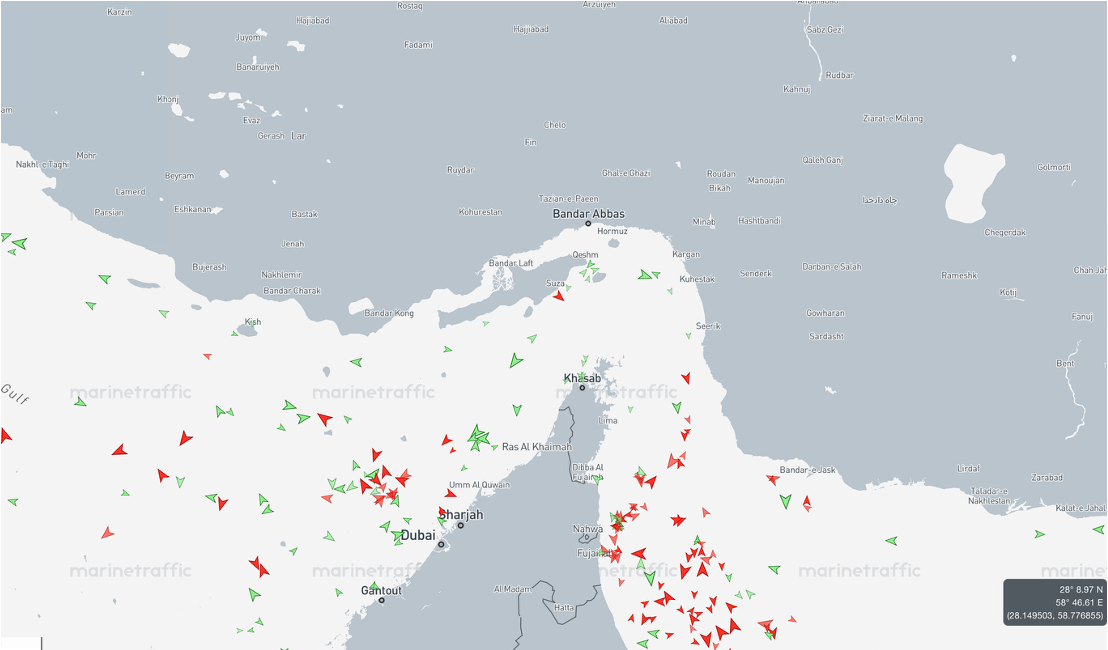
At the same time, open-source vessel tracking suggests a practical shift on the water. The number of ships observed passing through Hormuz appears to have increased compared with the first post-ceasefire days, even though total traffic is still far below normal commercial levels. That matters because ship movement is now one of the clearest real-time indicators of whether any part of the diplomatic understandings is actually being implemented.
 That shift matters. During the war, Iran’s closure of Hormuz could be framed by Tehran as a defensive wartime act taken while it was under direct attack from the United States and Israel. Today, the confrontation has moved into something colder and more ambiguous: the shooting has not fully resumed between Iran and the United States, but the strategic coercion has not ended either. In that environment, any attempt by Iran to stop or strike shipping carries a different political meaning than it did under active bombardment. The mechanism of pressure may look the same, but the legal, diplomatic, and military reading of that pressure is now much harsher. This is the same card, played in a different game.[3][6]
The initial breakdown in Islamabad made that change explicit. After the talks failed, President Trump announced that the United States would impose a blockade on Iranian ports, and U.S. Central Command then formally confirmed that enforcement would begin on April 13 at 1400 GMT. The blockade applies to vessels entering or leaving Iranian ports in the Arabian Gulf and Gulf of Oman, while neutral transit through Hormuz to non-Iranian destinations is nominally left untouched. CENTCOM’s notice also warned that vessels attempting unauthorized entry or exit could face interception, diversion, or capture. That is not rhetoric alone. It is a declared operational policy backed by the U.S. military. [1][2][3]
In other words, Washington is trying to redraw control of the maritime space without yet reopening the strait in the full commercial sense. Iran, for its part, is still using access to Hormuz as leverage for a much broader package: sanctions relief, release of assets, U.S. military pullback, and guarantees against renewed attack. Reuters reports that Tehran continues to connect the strait issue to those wider demands even as the ceasefire remains in place only in a fragile and temporary form. [3][6]
That leaves third countries in a narrowing corridor. Gulf states, Asian importers, European consumers, and shipping companies are not dealing with one controller of passage, but two competing coercive systems. On one side, the United States is pressing countries to support or at least comply with a campaign to reopen access on American terms, including a blockade of Iranian trade. On the other side, any country that seeks a practical arrangement with Iran for passage, access, or deconfliction risks direct friction with Washington. The Strait of Hormuz is no longer just a chokepoint. It is becoming a test of alignment. [3][4][7]
And that is where the international hesitation becomes important. Reuters reports that key U.S. allies, including Britain and France, have refused to join Trump’s blockade. Instead, they are discussing a separate defensive maritime mission focused on freedom of navigation after hostilities end, not participation in a coercive U.S. operation now. Turkey has also publicly warned against any new unilateral U.S. or Iranian “rules” for Hormuz. That hesitation shows the core problem in Washington’s approach: many states want the waterway open, but far fewer want to be enlisted into an American-Iranian escalation at sea. [5][9]
The market is already pricing the danger. Reuters reports oil moving above $100 a barrel as the talks collapsed and the blockade took effect, with analysts warning that the mission could become a major and open-ended military undertaking. Even before full enforcement, tanker traffic had already begun to thin and reroute. The economic message is simple: even a partial struggle over Hormuz is enough to shake energy markets and shipping calculations worldwide. [2][3][6]
So the headline reality is this: the card has not changed, but the board has. During the war, closure of Hormuz was part of a direct military exchange. In the ceasefire phase, the same pressure tool becomes more dangerous because it sits in the grey zone between diplomacy and renewed conflict. Iran is still trying to use control of passage as leverage. The United States is trying to strip that leverage away by force of naval power and legal warning. Both sides are acting as if the ceasefire is real, but neither is behaving as if the crisis is over. [2][3][6]
That is why this moment may be the most brutal phase of the ceasefire, not its calmest one. A ceasefire usually lowers the cost of miscalculation. Here, it may be doing the opposite. Because the fire has not fully resumed, each coercive move now carries more ambiguity, more diplomatic risk, and more room for competing interpretations. In open war, everyone knows the rules have collapsed. In this colder phase, every ship, every warning, and every attempted transit becomes a political signal that could still trigger a military answer.
References
[3] Reuters, “US begins blockade of Iran’s ports, Tehran threatens to retaliate,” April 13, 2026.
[4] Reuters, “NATO allies refuse to join Trump’s Iranian port blockade,” April 13, 2026.
[5] Reuters, “US blockade of Iran will be major military endeavor, experts say,” April 13, 2026.
[7] Reuters, “Turkey concerned about any new Iran-US rules for Strait of Hormuz,” April 13, 2026.
[9] Reuters, “Oil tankers steer clear of Hormuz ahead of US blockade,” April 13, 2026.